From body analysis to daily integration,
six steps to measure, loosen, practise and re-measure.
We connect passive care and active learning in one continuous flow.
The same 6 steps for everyone,
one standard.
Whatever brings you in, the start and the order are the same. Only the pace and where we spend more time change.
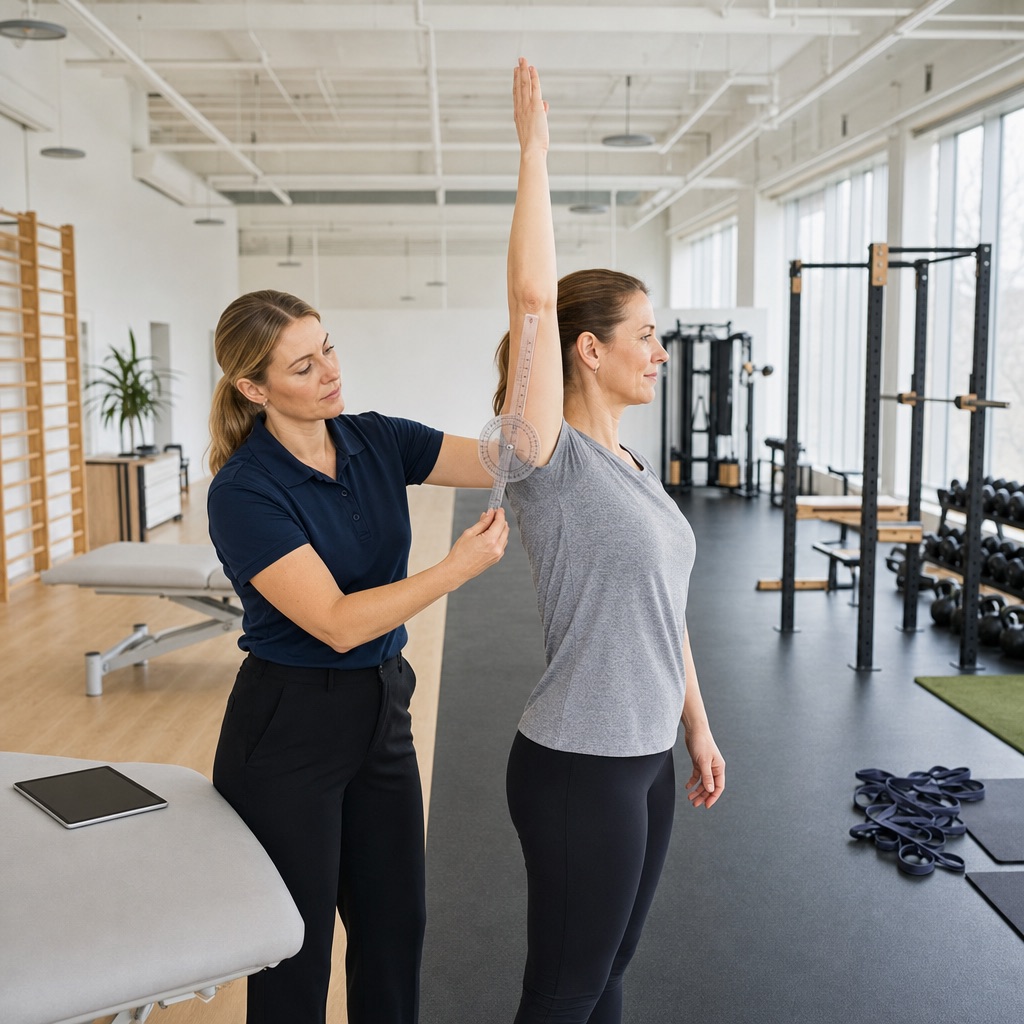
Check your body
We start from data, not from a vague feeling.
- AI-based static posture analysis (forward head, pelvic tilt, weight distribution)
- Dynamic movement evaluation and joint range-of-motion measurement
- Identifying areas of restricted mobility and root issues
- Breathing and intra-abdominal pressure pattern assessment
Release what is stiff
We first slowly loosen what has become stiff.
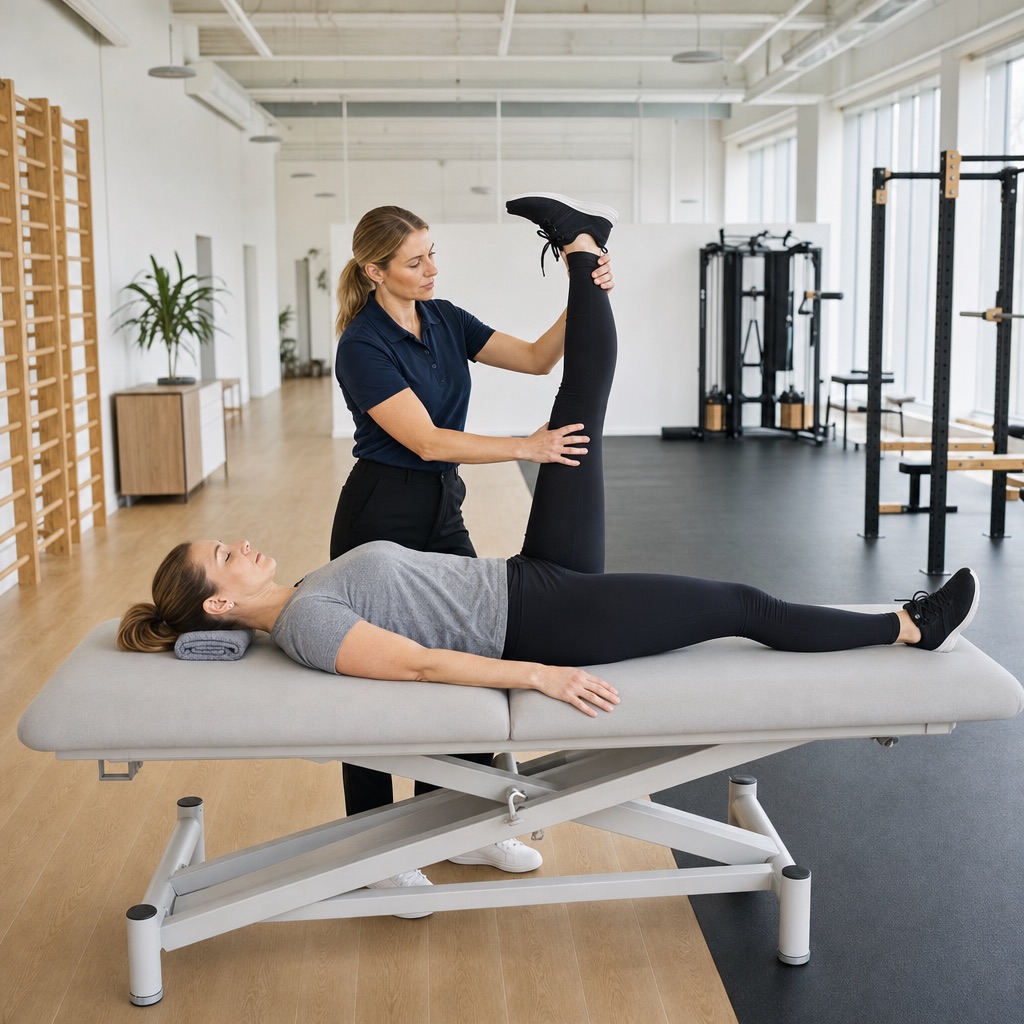
- P-Stretching (Passive Stretching) — assisted stretching organised from international exercise research and hands-on experience
- Widening range of motion in stiff areas
- Slowly lengthening stiff areas to widen how far you move
- Assisted stretching with the coach moving your arms and legs
Wake up sleeping muscles
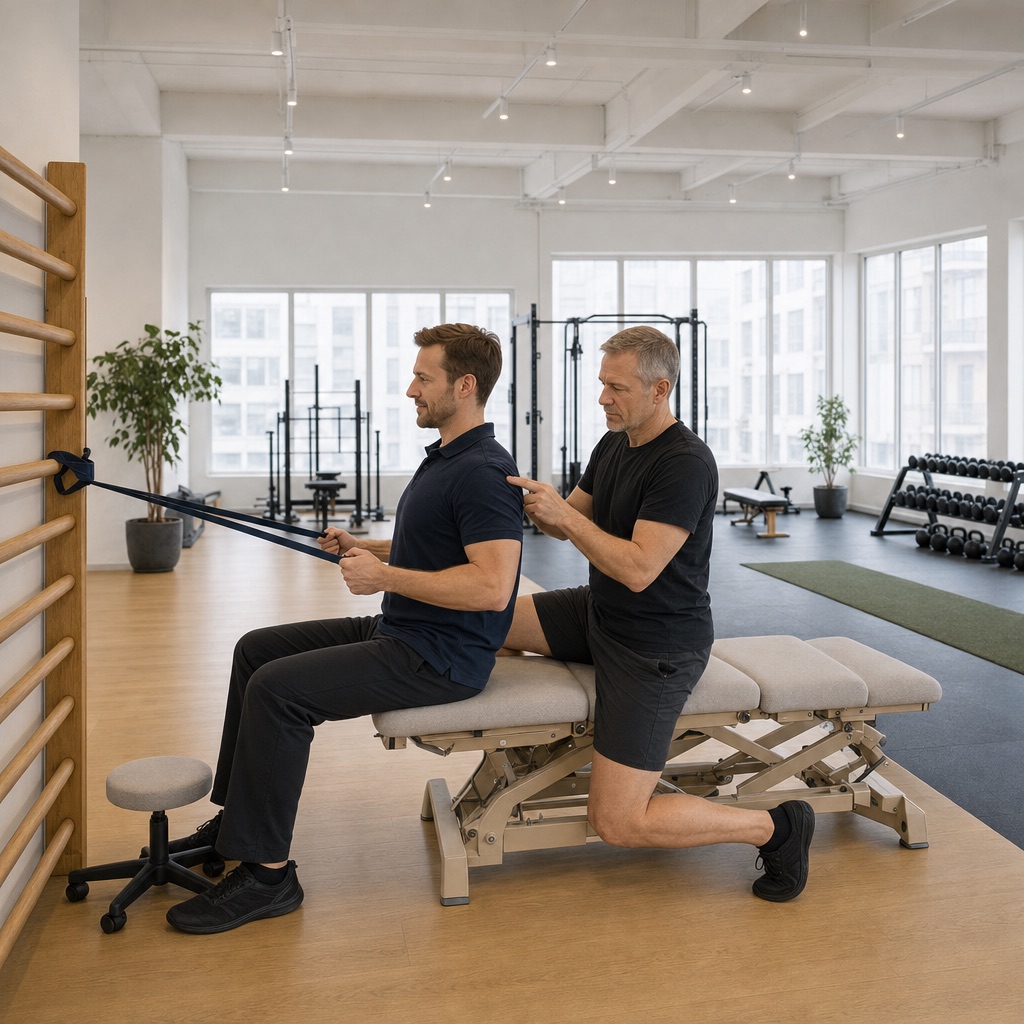
We help you use rarely used muscles again, precisely.
- Re-learning breathing and intra-abdominal pressure (diaphragm, transversus abdominis)
- First inhibiting overactive areas to restore correct movement
- Sequential isolated activation of core spinal muscles
- Restoring the foot–pelvis–spine connection
Relearn the basics
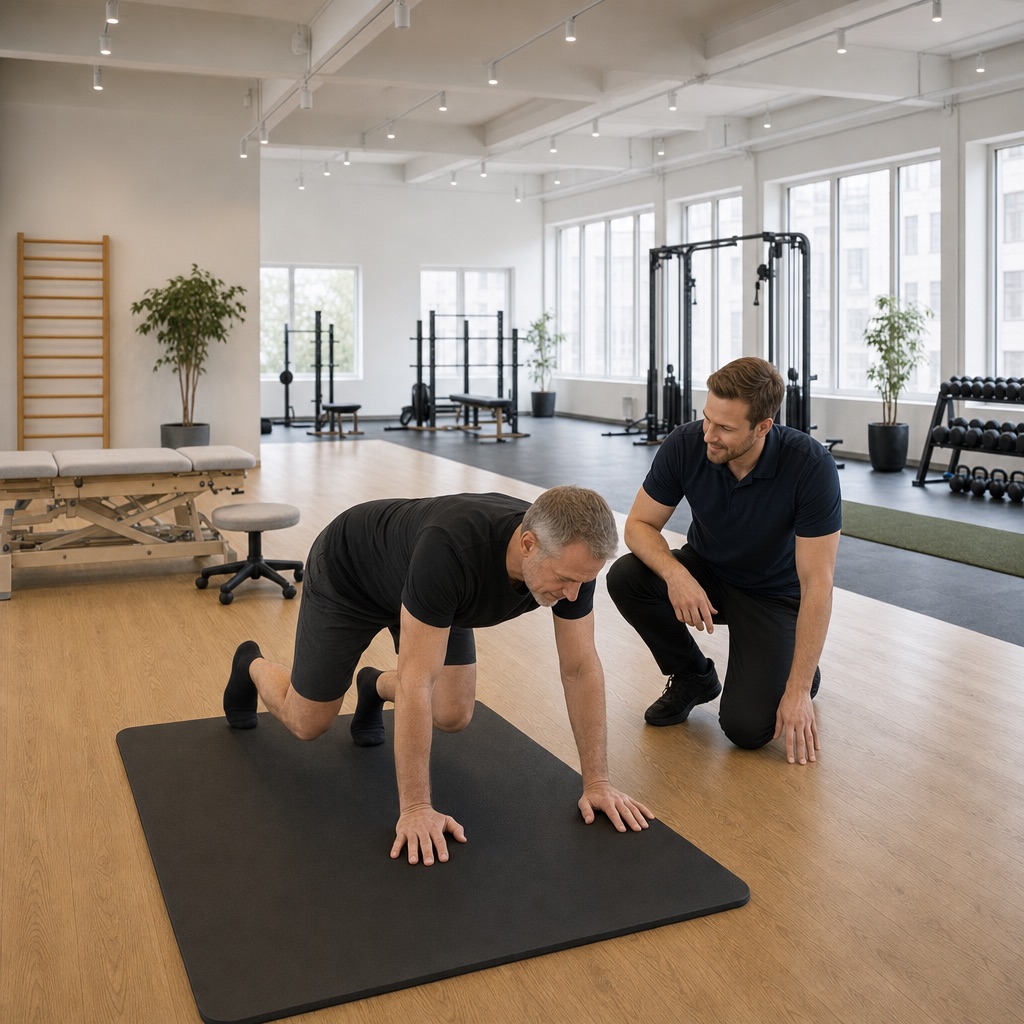
Before any machine work, we return to the seven primal patterns the body was made for.
- Seven primal patterns: Squat / Hinge / Push / Pull / Lunge / Carry / Rotate
- Restoring quadrupedal patterns
- Applying the basic movements learned as a baby (crawling, rolling, squatting)
- Pattern accuracy first, before any external load
Exercise that fits you
We recommend exercise tuned exactly to your body, work, hobby, and daily movement.
- Strengthening built on primal movement so daily life is no longer a strain
- Movement analysis of your hobby sports and tailored supplementary work
- Re-evaluation and immediate adjustment in every session
- Safe, progressive load design that builds independent execution
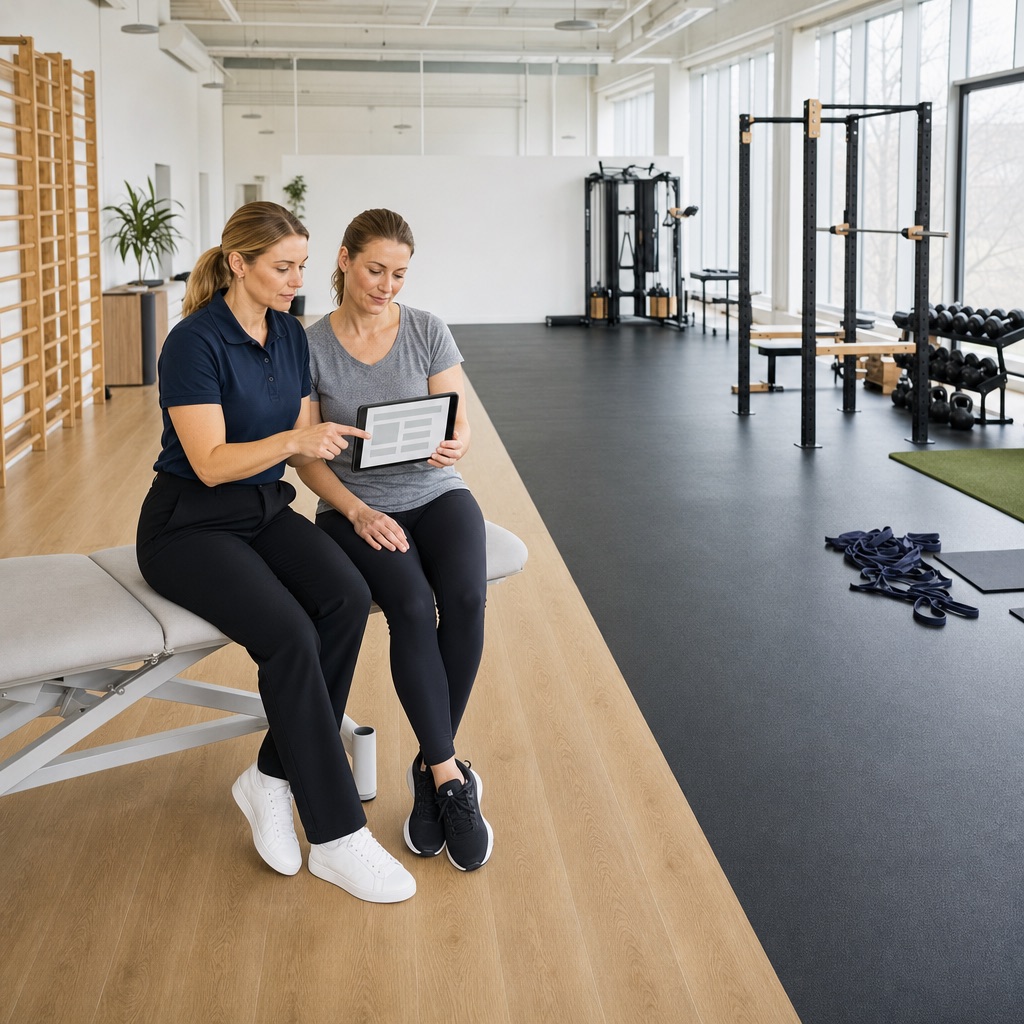
Make it a daily habit
We make sure the change inside the center carries through the other 23 hours of the day.
- For experienced movers: identifying gaps in current training and guiding tailored supplementary work
- For beginners: building lifelong, correct exercise habits one can sustain alone
- Micro-break exercise plan throughout the day (1–3 min)
- A homework set after every session, with close follow-up on completion
What this method rests on
This method was built with reference to standard textbooks and peer-reviewed papers in the following areas. They are not studies of BODYCHECK Care's results.
Motor Control & Motor Learning
- Shumway-Cook A, Woollacott MH. Motor Control: Translating Research into Clinical Practice. Wolters Kluwer / Lippincott Williams & Wilkins.
- Schmidt RA, Lee TD. Motor Control and Learning: A Behavioral Emphasis. Human Kinetics.
Explaining Movement to People Afraid to Move
- Butler DS, Moseley GL. Explain Pain. Noigroup Publications.
Functional Movement Screen (FMS)
- Cook G, Burton L, Hoogenboom B. (2006). Pre-participation screening: the use of fundamental movements as an assessment of function — Part 1. North American Journal of Sports Physical Therapy, 1(2), 62–72.
- Cook G, Burton L, Hoogenboom B. (2006). Pre-participation screening: the use of fundamental movements as an assessment of function — Part 2. North American Journal of Sports Physical Therapy, 1(3), 132–139.
Movement System & Muscle Imbalance
- Sahrmann S. Diagnosis and Treatment of Movement Impairment Syndromes. Mosby.
- Page P, Frank C, Lardner R. Assessment and Treatment of Muscle Imbalance: The Janda Approach. Human Kinetics.
Myofascial System & Spine Biomechanics
- Wilke J, Krause F, Vogt L, Banzer W. (2016). What is evidence-based about myofascial chains: A systematic review. Archives of Physical Medicine and Rehabilitation, 97(3), 454–461.
- McGill SM. Low Back Disorders: Evidence-Based Prevention and Rehabilitation. Human Kinetics.
Symptom Modification Procedure (SMP)
- Lewis JS. (2009). Rotator cuff tendinopathy/subacromial impingement syndrome: is it time for a new method of assessment? British Journal of Sports Medicine, 43(4), 259-264.
- Lewis J, McCreesh K, Barratt E, Hegedus EJ, Sim J. (2016). Inter-rater reliability of the Shoulder Symptom Modification Procedure in people with shoulder pain. BMJ Open Sport & Exercise Medicine, 2(1), e000181.
Dynamic Neuromuscular Stabilization (DNS) · Developmental Kinesiology
- Frank C, Kobesova A, Kolar P. (2013). Dynamic Neuromuscular Stabilization & Sports Rehabilitation. International Journal of Sports Physical Therapy, 8(1), 62–73.
- Kobesova A, Kolar P. (2014). Developmental kinesiology: Three levels of motor control in the assessment and treatment of the motor system. Journal of Bodywork and Movement Therapies, 18(1), 23–33.
A measurable start,
a trackable arrival.
Every journey begins with the precise body and movement analysis. Detailed timing and scheduling are guided through consultation.